

Speech Therapy
Pediatric speech-language pathologists help children develop the communication skills they need to connect, learn, and thrive. Our licensed speech therapists evaluate and treat children with a wide range of speech, language, and communication challenges. This may include delays in talking, difficulty understanding or using language, unclear speech sounds, stuttering, social communication differences, and feeding or swallowing concerns. Our therapists use evidence-based assessments to understand each child’s strengths and areas of need, then create individualized treatment plans tailored to the child’s developmental level and family goals.
Therapy sessions are play-based, engaging, and designed to make learning feel natural and fun. Pediatric speech therapists use toys, games, books, movement activities, and daily routines to encourage communication growth while keeping children motivated. Sessions may focus on improving speech clarity, expanding vocabulary, building sentence structure, strengthening social skills, supporting alternative communication systems, or improving oral-motor and feeding abilities. Our therapists collaborate closely with parents and caregivers, providing education, strategies, and home practice ideas so progress continues beyond the therapy room.
Our clinic offers a supportive environment where children receive consistent, specialized care while maintaining their regular home and school routines. Our speech therapists work as part of a multidisciplinary team alongside our occupational therapist and other professionals to support the whole child. By partnering with families and celebrating each child’s progress, we help children gain confidence, independence, and the ability to communicate effectively in everyday life.
Learn more
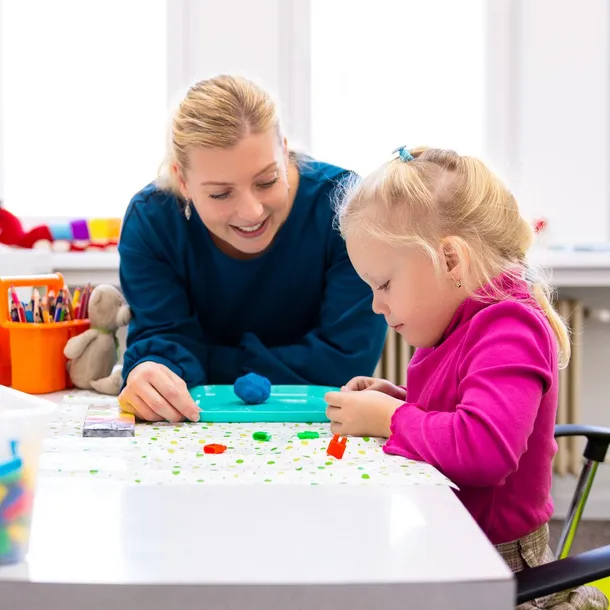
Occupational Therapy
Pediatric occupational therapists help children develop the skills needed to participate successfully in everyday activities at home, school, and in the community. Our occupational therapist evaluates and treats children who experience challenges with fine motor skills, sensory processing, self-care tasks, emotional regulation, executive functioning and overall independence. This may include difficulty with handwriting, dressing, feeding, attention, play skills, coordination, or managing sensory input such as sounds, textures, and movement. Our therapists use comprehensive, evidence-based assessments to understand each child’s strengths and needs and create individualized treatment plans that support functional development.
Occupational therapy sessions are play-based, creative, and tailored to each child’s interests to promote engagement and confidence. Our therapists use activities such as obstacle courses, crafts, sensory play, strengthening exercises, and daily living tasks to build motor skills, coordination, body awareness, and regulation skills. Sessions may focus on improving hand strength and dexterity, visual-motor integration, sensory modulation, executive functioning, and independence with routines like eating, dressing, and classroom participation. Occupational therapists also coach parents and caregivers, providing practical strategies and environmental supports that help children succeed across settings.
Occupational therapy provides a structured yet fun environment where children can safely practice new skills while remaining connected to their daily routines. Occupational therapists frequently collaborate with speech therapists, physical therapists, educators, and families to support the whole child’s development. By addressing both physical and sensory-emotional needs, pediatric occupational therapists empower children to build independence, confidence, and the skills necessary to fully participate in meaningful everyday activities.
Learn more

Feeding Therapy
Feeding therapy helps infants and children develop safe, comfortable, and positive eating experiences. Our feeding therapist will evaluate and treat children who have difficulty with eating, drinking, or swallowing. Challenges may include picky eating, limited food variety, difficulty chewing or swallowing, oral motor weakness, food refusal, bottle feeding concerns, transitioning to solids, or medical and sensory-related feeding issues. Our therapist completes feeding evaluations to understand each child’s medical history, oral motor skills, sensory preferences, and mealtime routines, allowing them to create individualized treatment plans that support both nutrition and skill development.
Feeding therapy sessions are child-centered, supportive, and designed to reduce stress around mealtimes. Therapists use play-based and evidence-informed approaches to help children build oral motor strength, coordination, and tolerance for new foods, textures, and tastes. Sessions may focus on improving chewing and swallowing skills, expanding food variety, increasing acceptance of new foods, supporting self-feeding skills, and promoting healthy mealtime behaviors. Caregivers are active participants in therapy, learning practical strategies to create positive mealtime routines, reduce pressure, and confidently support progress at home.
Our feeding therapy provides families with specialized guidance in a structured and encouraging environment while maintaining familiar home routines. Our feeding therapist collaborates with speech-language pathologists, occupational therapists, physicians, and dietitians to address the medical, sensory, and developmental aspects of feeding. By supporting both the child and family, feeding therapy helps children build confidence with eating, improve nutrition and growth, and develop lifelong healthy relationships with food.